.png)
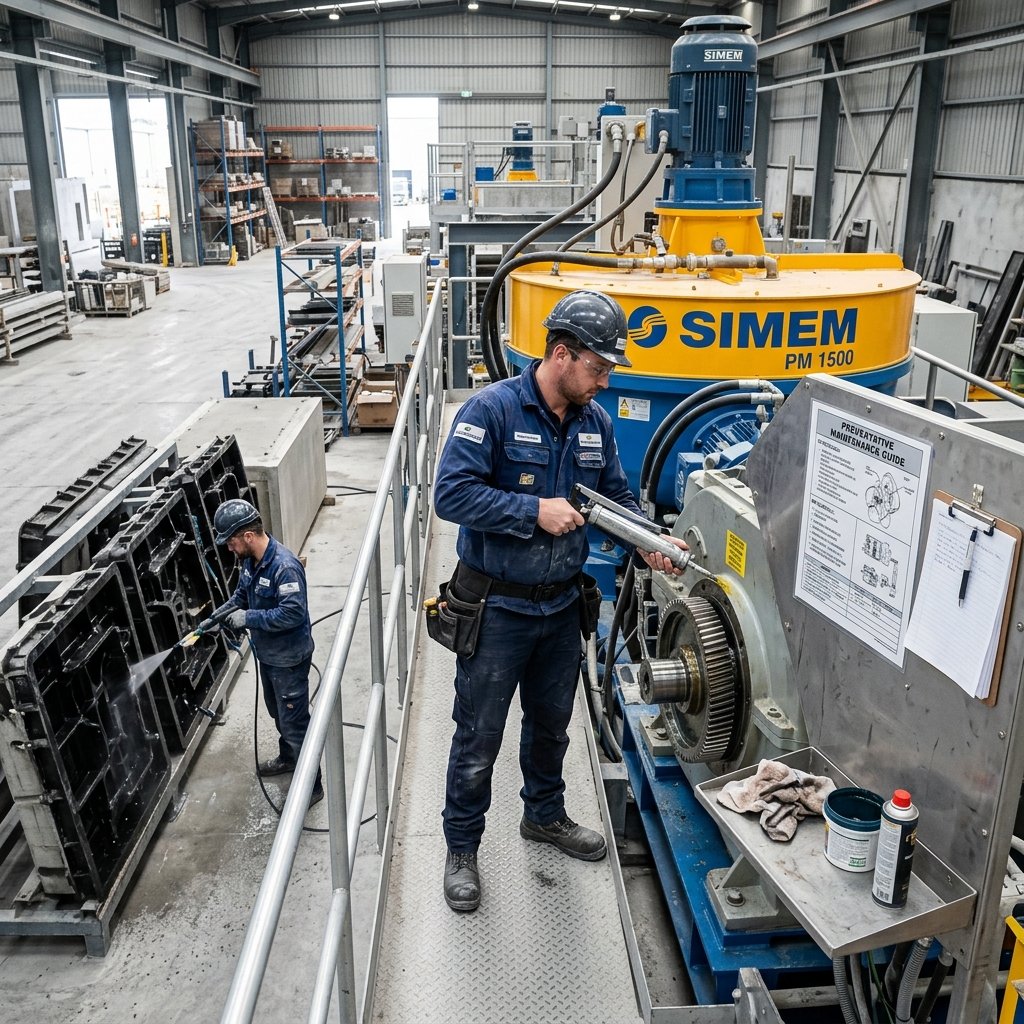
"Your machinery is your biggest asset. Whether you’re running a 6,000 sqft capacity plant or a 3,300 sqft semi auto unit, these simple weekly checks will save you thousands in downtime."
High volume concrete paving production demands reliable, continuously operating machinery. Implementing a structured preventative maintenance program is crucial. By utilizing this maintenance guide for paver block machines, you can avoid costly replacement components and ensure maximum operating uptime for your plant.
1. Daily Post Shift Planetary Concrete Mixer Cleaning
To maximize planetary concrete mixer durability, wash out the mixing chamber and clean the mixing blades after every single production shift. Wet concrete must never be allowed to cure inside the drum or on the blades. Cured cement creates aggregate friction, which burns out your electric motors and strains the planetary gearboxes. Thoroughly grease all bearing points weekly.
2. Strategic Rubber Mould Maintenance
Rubber moulds can achieve over 100,000 casting cycles when treated with care. To ensure rubber mould maintenance success:
- Avoid Acidic Washes: Do not soak rubber moulds in concentrated hydrochloric acid. Acid eats away the synthetic polymer matrix, causing swelling and warping. Use high dilution washes only when removing tough concrete crusts.
- Store in Shade: UV rays degrade rubber chemistry, turning moulds brittle. Always store moulds stacked neatly under a shade structure when not in use.