.png)
In the high volume paver block manufacturing industry, efficiency on the production line is directly tied to profitability. Every additional step in your manufacturing process adds labor time and material costs.
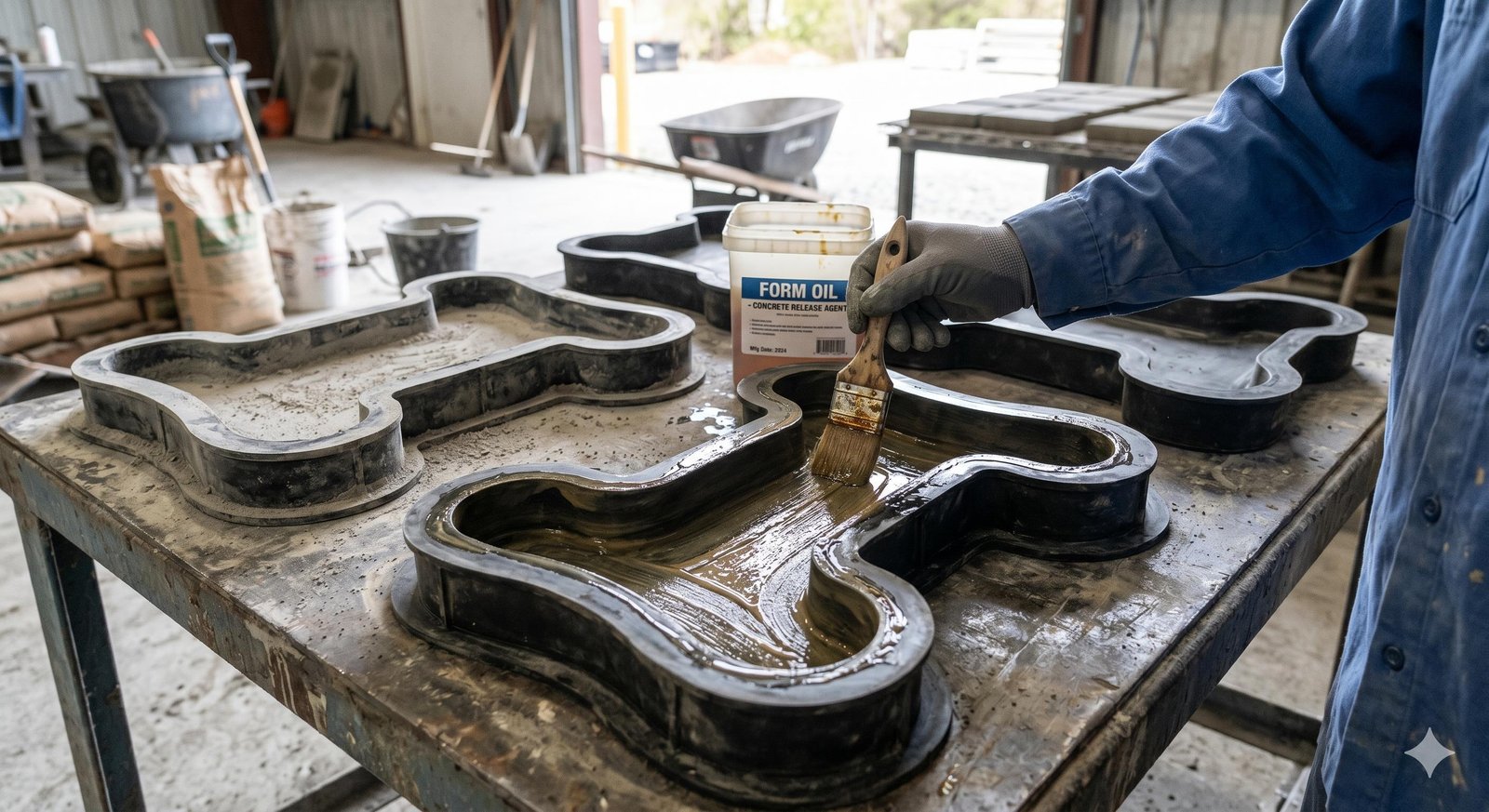
One of the most common questions new and scaling manufacturers ask is: Do I need to apply a mould release agent or oil to rubber paver moulds before pouring the concrete?
The short answer is no. Eliminating the use of release oil for rubber paver moulds is one of the most significant operational advantages of choosing rubber over traditional materials. Here is a breakdown of why you can skip the oil and how it benefits your production line, along with essential rubber mould maintenance tips to extend their lifespan.
The Natural Advantage of Rubber Moulds
When manufacturing wet cast paver blocks, the goal is a seamless demoulding process that leaves the concrete surface flawless. Rubber moulds naturally facilitate this without chemical intervention for two primary reasons:
1. Inherent Non Stick Surface High quality rubber has naturally non porous and non stick properties. Unlike rigid materials that grip the curing cement, wet concrete simply does not bond chemically or physically to the rubber surface. Once the concrete has fully cured, it is ready to be removed without tearing or sticking.
2. Structural Flexibility The demoulding process relies heavily on flexibility. Because rubber moulds can bend and flex, workers can easily peel the mould away from the cured block. This natural "pop out" mechanic completely replaces the need for a lubricating barrier.