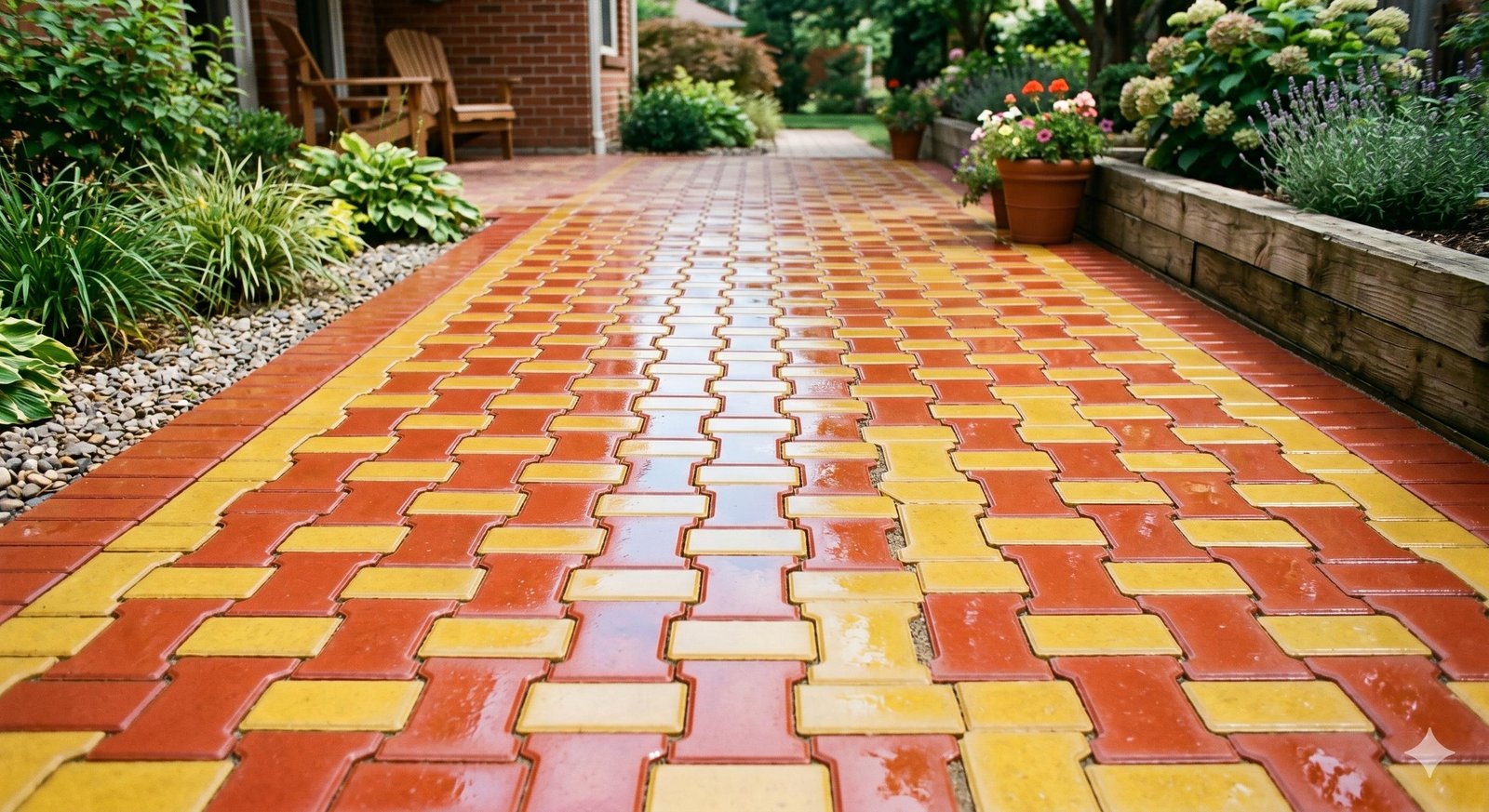
Glossy concrete paver blocks cast from flexible rubber moulds

The Secret to a Premium Glossy Finish in Paver Blocks

In the industrial manufacturing of concrete products, the visual appeal of your output is just as critical as its structural integrity. Clients and contractors associate a smooth, glossy finish with premium quality and durability.

If you are looking to elevate your product line and produce paver blocks with a glass like shine, the solution lies in your chemical admixtures specifically, one highly effective compound.

The Chemical Behind the Shine: PCE Superplasticizers

To achieve a flawless, glossy finish on a concrete paver block, the industry standard chemical to use is a Polycarboxylate Ether (PCE) based superplasticizer. Often referred to simply as a high range water reducer or concrete admixture, PCE is the key to unlocking premium aesthetics without compromising the core strength of your blocks.

PCE superplasticizer concrete chemical admixture for glossy finishing

How PCE Creates a Glass Like Finish

Achieving a high gloss surface is fundamentally a challenge of fluid dynamics and water management. If you want to know how to get a glossy finish on paver blocks, it starts with utilizing the best concrete mixer for paver block manufacturing, which is our high performance planetary mixer, combined with a PCE superplasticizer. Here is exactly how PCE superplasticizers solve this problem on the production line:

1. High Flowability With Low Water Content

Standard concrete mixes require water to become workable, but excess water dilutes the cement paste and severely weakens the final block. A PCE superplasticizer chemically disperses the cement particles, making the concrete highly fluid while keeping the water to cement ratio strictly minimized.

2. Perfect Mould Conformity

For a paver to be glossy, it must perfectly mirror the smooth inner surface of the rubber or PVC mould. Because the PCE admixture makes the low water mix highly flowable, the concrete can easily reach and fill every microscopic corner and surface texture of the mould.

3. Eliminating Surface Imperfections By increasing the density and flow of the mix, PCE helps push out microscopic air pockets during the vibration process. The result is a dense, tightly packed surface against the mould wall that cures into a brilliant, glass like shine once demoulded.

Production Takeaways for Manufacturers

Integrating a PCE based superplasticizer into your production process is a highly strategic move for scaling quality.

Strength Retention: You maintain the high compressive strength required for heavy duty paving.

Premium Aesthetics: The resulting blocks command a higher market value due to their superior finish.

Operational Efficiency: Highly workable concrete reduces wear and tear on your mixers and vibrating tables.

By carefully calibrating your PCE dosage and pairing it with high quality, clean rubber moulds, your manufacturing output will consistently meet elite, enterprise level standards.

Balasaheb, Founder of Balaji Construction Machines & Spares

Written & Reviewed by Balasaheb

Founder of Balaji Construction Machines & Spares. With over 19 years of hands on expertise engineering industrial wet cast brick, block, and concrete planetary mixing machinery, Balasaheb is a trusted authority in concrete production optimization.